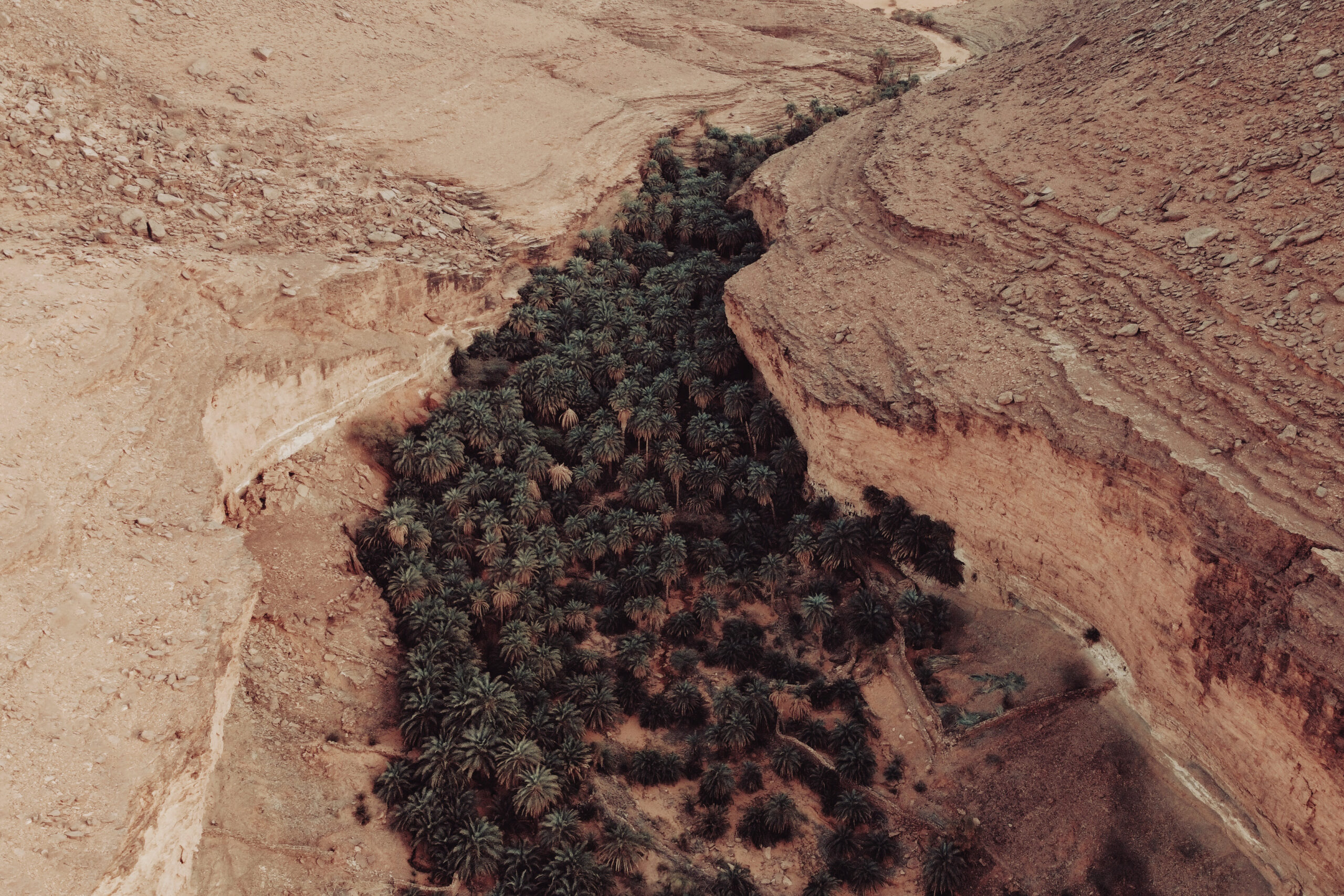
Terjit (Arabic: ترجيت) is an oasis 45 km by road south of Atar, the capital of the Adrar Region deep into the Sahara Desert of Mauritania.
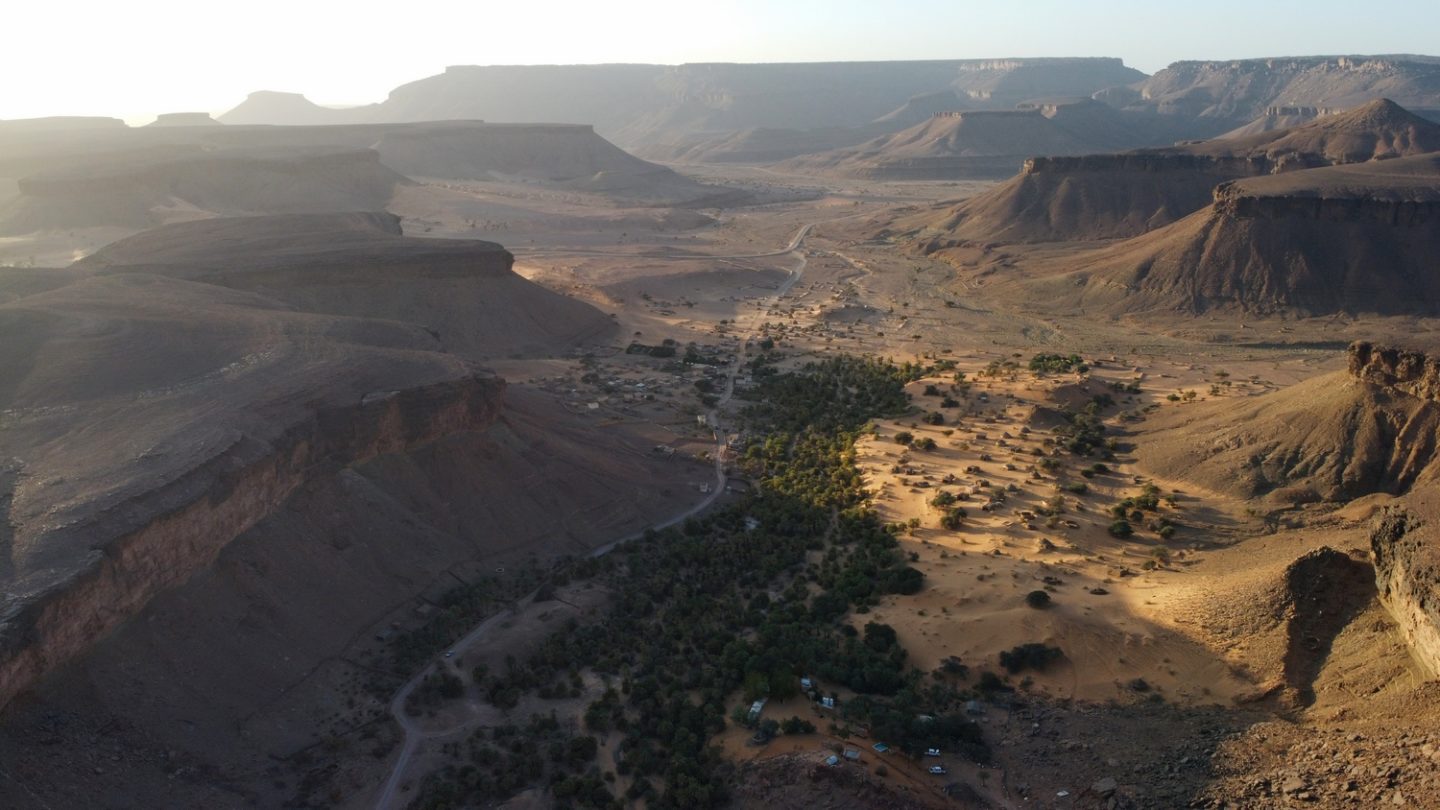
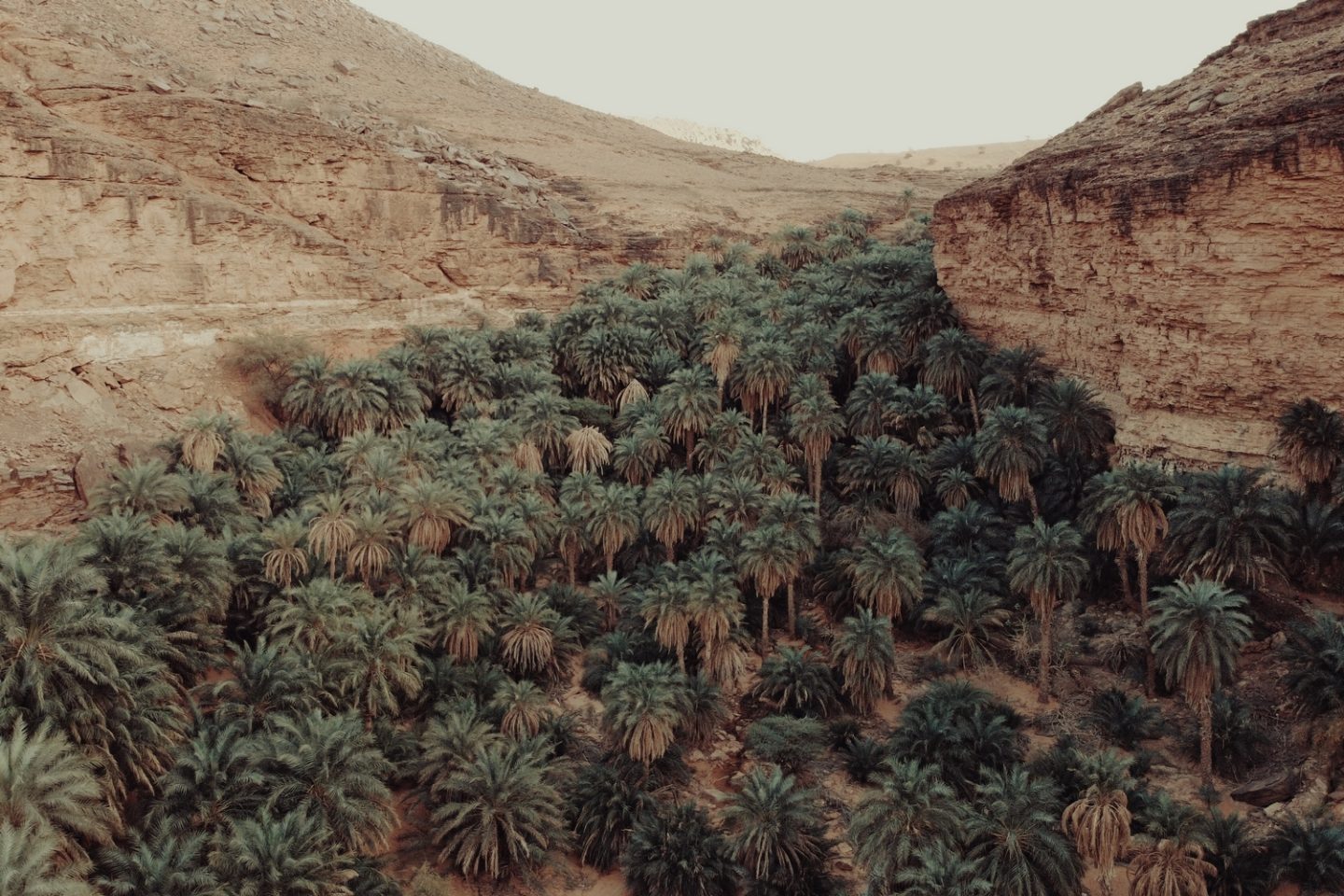
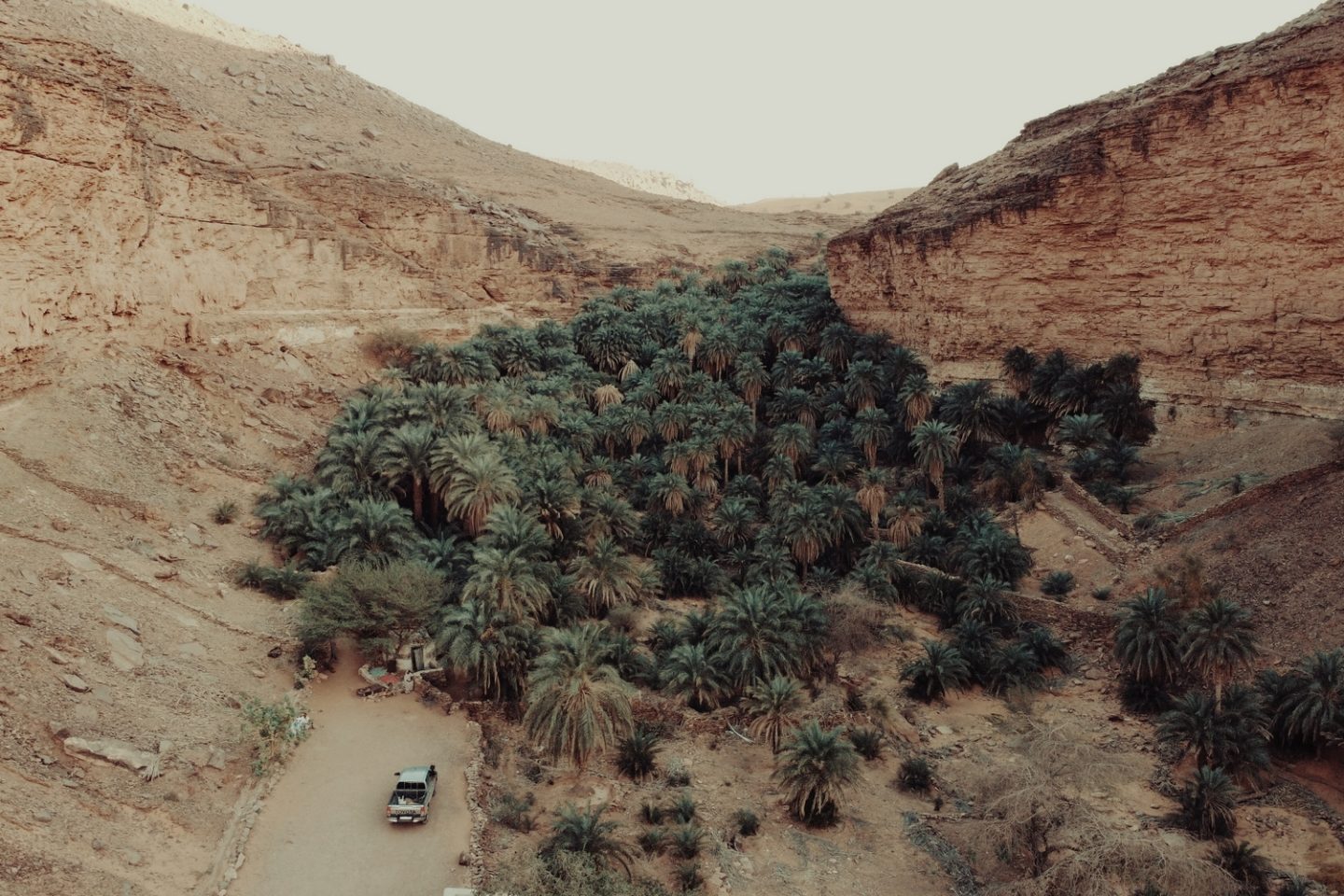
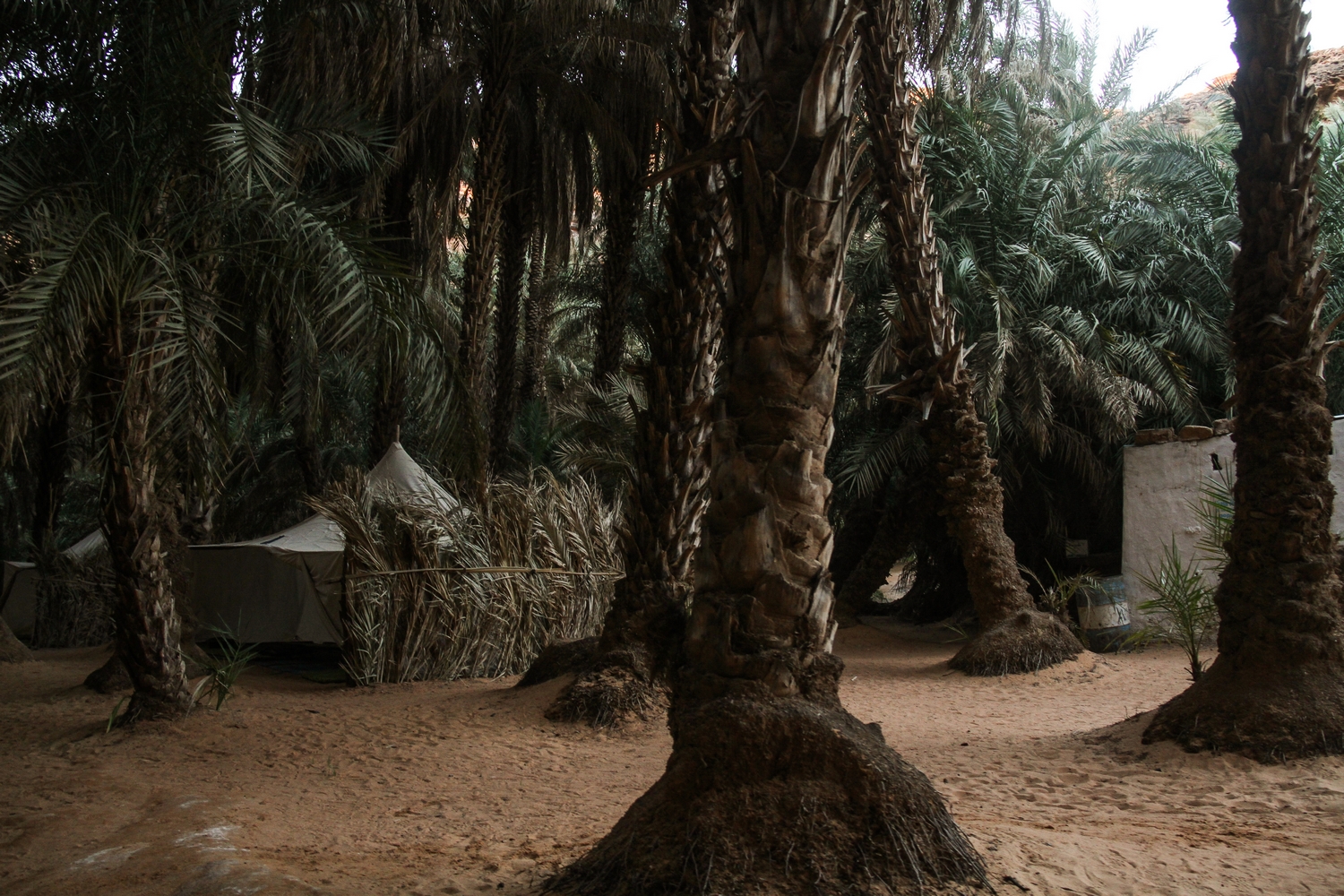
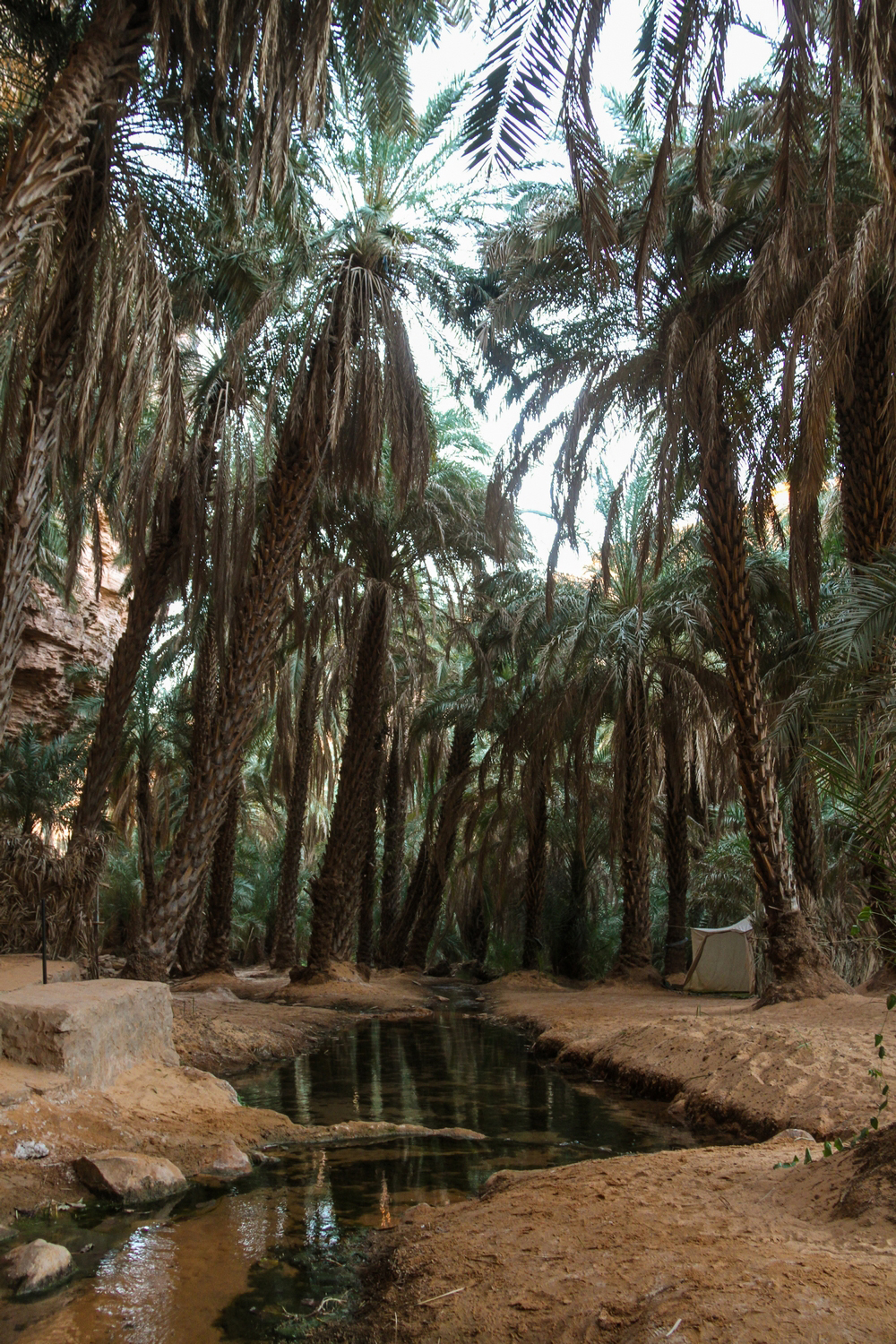
The Terjit Oasis nestles in a gorge on the western edge of the Adrar plateau covered by a rich palm grove stretching a few hundred meters alongside a stream which emerges from a spring. Terjit is part of the commune of Maaden in the Aoujeft.
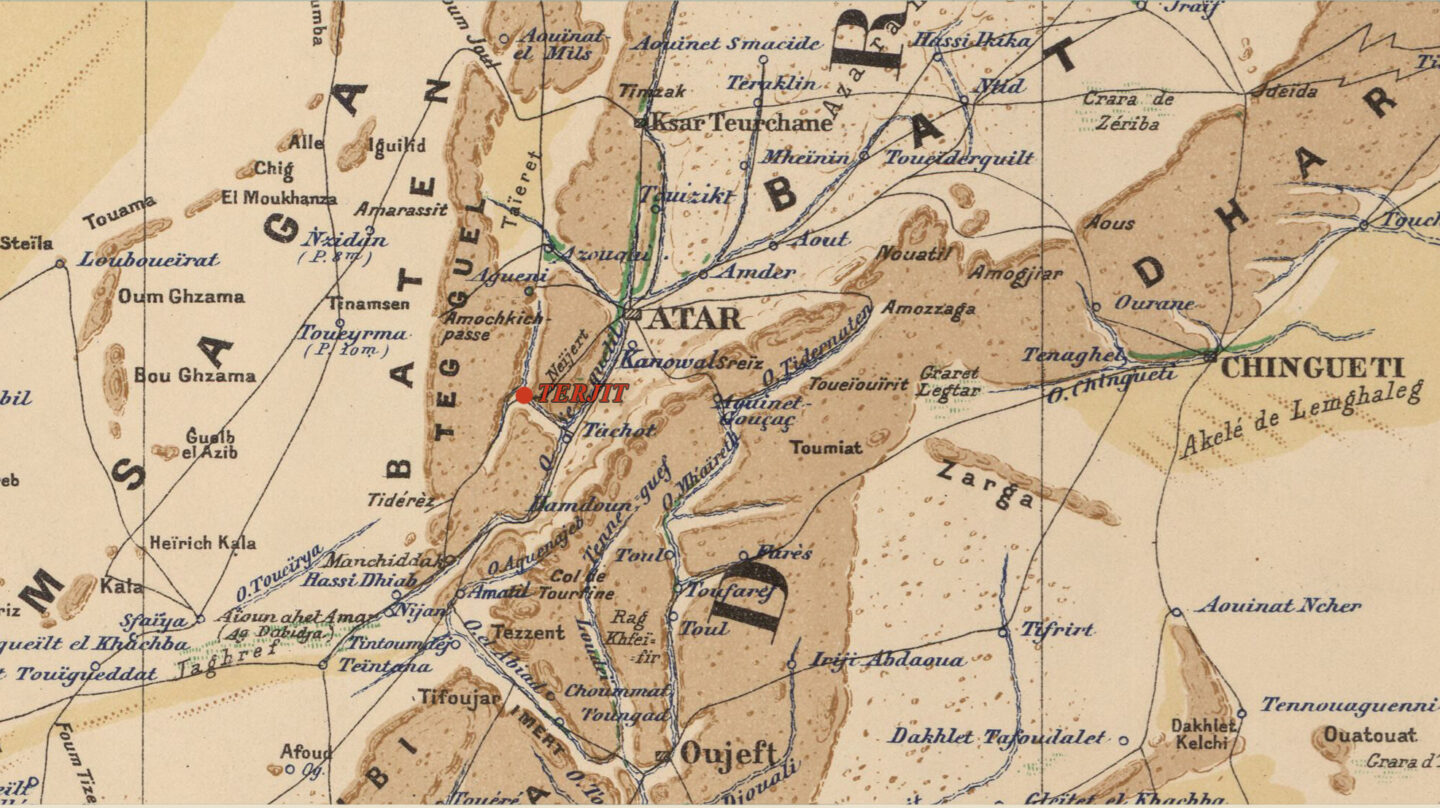
The Terjit Oasis was known to the locals as paradise in hell.
For hundreds of years it had been a place of rest and shelter for caravans and insanely brave lone wayfarers who decided to travel through the vast Sahara Desert.
A small valley that stretched no more than a few hundred meters provided weary travelers with rest, enjoyment, and deliverance, albeit briefly, from the sweltering heat and hot winds. Here one could plunge into a pond filled with clear cold water from artesian sources, replenish drinking water before continuing their journey, and treat themselves with fresh fruits from the palm grove.
The photo below shows you the Terjit village at the bottom and the junction where the paved road N1 called Route d’Aoujeft meets the sand road that takes you to the valley at the top. The Terjit Oasis lies right behind where the shot has been taken
ABOVE: inside a traditional family house in the ancient caravnan town of Ghadames
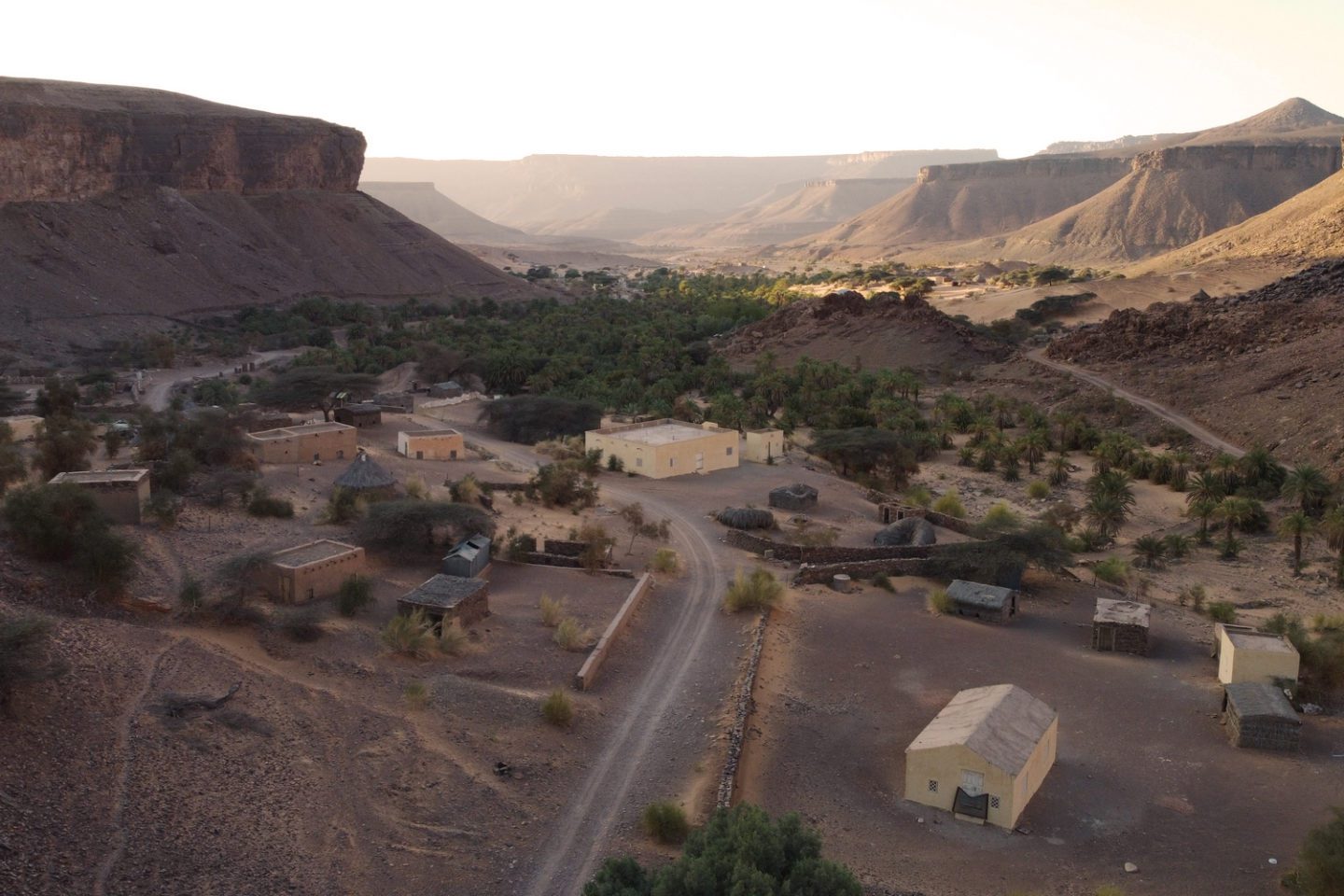
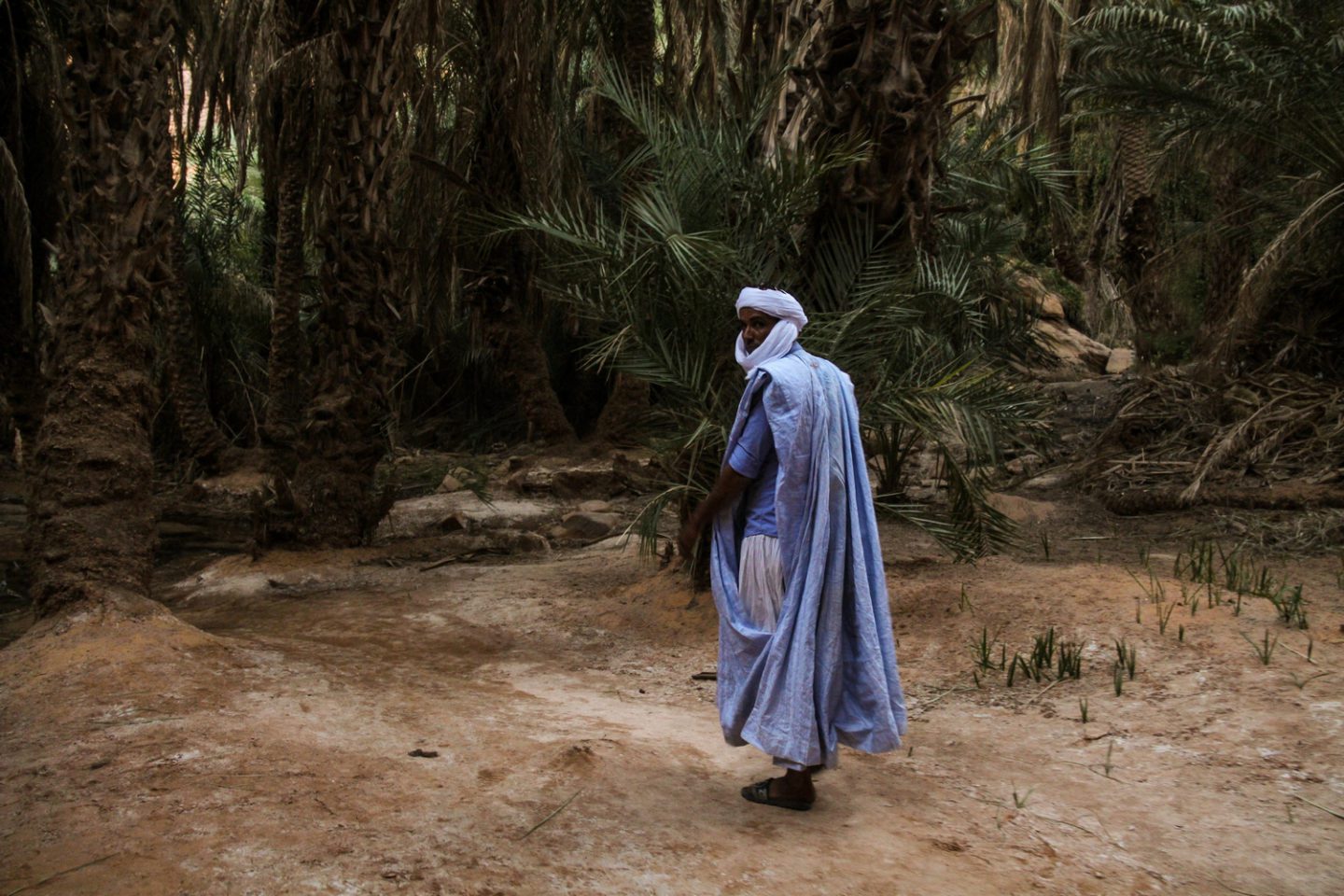
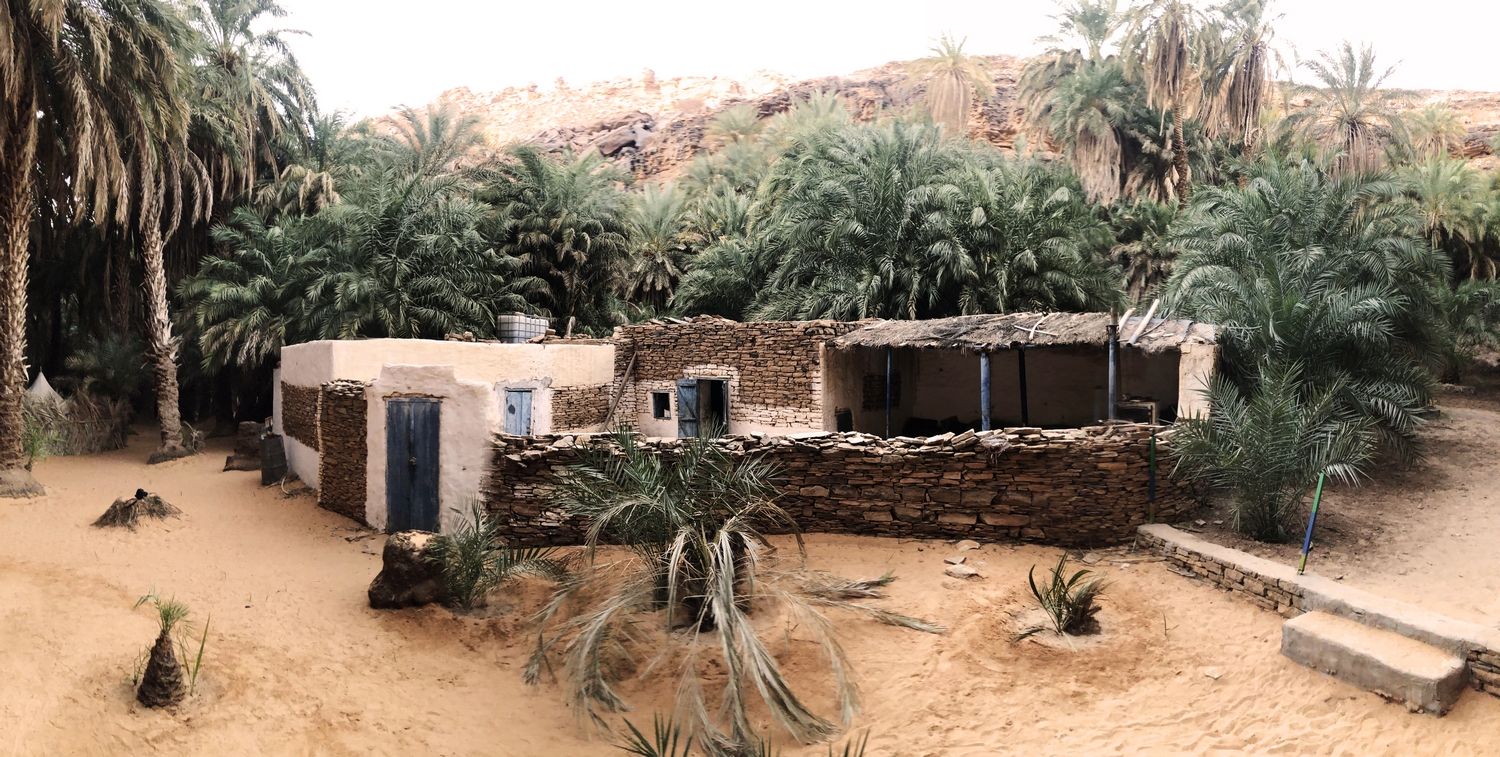
To date about 300 people live in the village, where there are few buildings and huts, including an elementary school and some shops.
The livelihood for the people of Terjit is certainly the cultivation of palm trees and its precious fruits: dates.
ABOVE: inside a traditional family house in the ancient caravnan town of Ghadames
In the days of the nomadic desert tribes, one of the most difficult tasks was to find a resourceful plot of land that was conducive to life.
In the mid-17th century the first tribe who settled in Terjit Valley was Awlad Khaylan (اولاد قيلان).
At that time the oasis was small but insidious, inhabited by many wild animals. Wolfs, deer an other species were dominant in the Terjit green lung keeping humans away from entering it.
ABOVE: inside a traditional family house in the ancient caravnan town of Ghadames
The new inhabitants though were afraid to enter the forest so they called the Smasid (السماسيد) from Oujeft (اوجفة), the neighboring tribe to help in the mission.
The two tribes so decided to join their forces and try to take over the Terjit Oasis, but none had enough courage to do it, so each tribe sent its own man forward to conquer the forest.
ABOVE: inside a traditional family house in the ancient caravnan town of Ghadames
The man sent by the Smasid tribe, Mohamed Alhajaj, the fifth grandfather of the actual owners of the Oasis, succeeded in the heroic quest.
He had the brilliant idea of setting fire to a small portion of the forest, and pushing the smoke into it, so that the animals would rather die or run away.
ABOVE: inside a traditional family house in the ancient caravnan town of Ghadames
In that same period some problems occurred between the two tribes but the Smasid managed to take over the place and they planted other palm trees.
ABOVE: inside a traditional family house in the ancient caravnan town of Ghadames
Today Terjit Oasis is also a place of repose for the wealthy residents of nearby towns who come here for the weekend to enjoy the coolness in the shade of spreading palms, fresh air, and for a peaceful refresh in the ponds.
ABOVE: inside a traditional family house in the ancient caravnan town of Ghadames
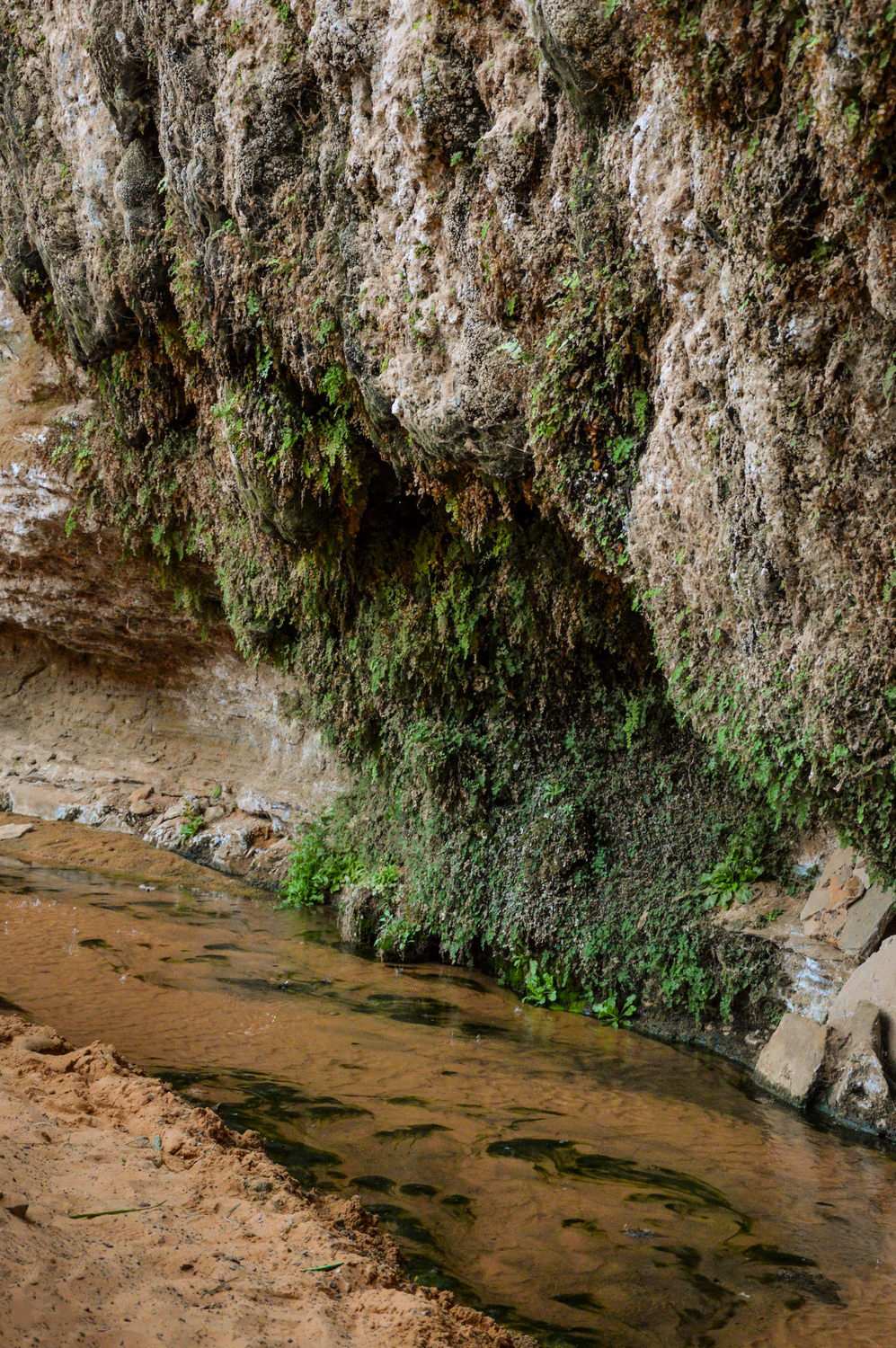
Walking towards the end of the palm grove, where the source of water rises, in total peace you can hear the incredible symphony that the drops of water, falling from the surrounding rocks into the stream, make.
ABOVE: inside a traditional family house in the ancient caravnan town of Ghadames


